Commercial Vehicle Service
 Back
Back
At a glance
Challenge: Replaced costly legacy systems with a unified, user-focused service for the full vehicle testing journey.
Process: Validated new designs through rapid testing, constant iteration, and transparent documentation that built trust.
Outcome: Delivered a modern service that passed GDS Beta flawlessly and reduced legacy dependence.
Learnings: Perspective, empathy and openness drive collaboration and lasting change.
Introduction
Transforming how the DVSA manages and tests commercial vehicles. Moving from ageing legacy systems to a cohesive, transparent service that helps users work more efficiently and restores confidence in how the organisation delivers its digital services.
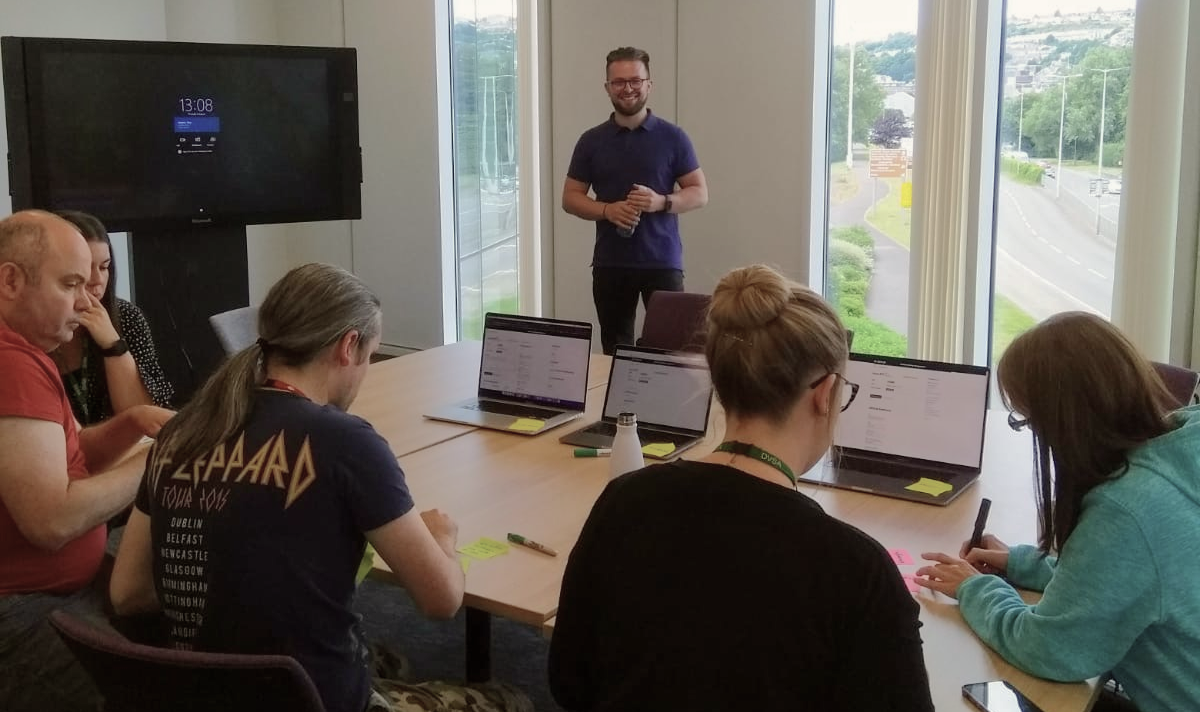
Our visit to the CSC Swansea office to run several workshops with DVSA staff
The challenge
The DVSA Commercial Vehicle Service (CVS) supports a broad mix of users, from testing facilities and manufacturers to importers, exporters and DVSA’s own customer service centre. These groups relied on outdated, costly systems that were difficult to maintain.
After the COVID-19 pause, we joined as the new partner with Kerv Digital. The goal was clear to move away from legacy architecture and end an ATOS contract costing around £500,000 a month.
Our first focus was the Manage Your Vehicle Testing (MYVT) portal, where users top up accounts, manage invoices and track testing activity.
Process and key activities
After spending some time reviewing the previous designer’s research and designs, I found a lot of strong foundations but also several areas that could be improved. The information architecture and navigation worked in parts, but often broke down when users needed to complete more complex tasks.
To test my ideas, I ran an A/B test comparing the existing designs with new prototype flows I created. Out of ten users, nine preferred and performed better with the new version. It was faster, clearer and just made more sense.
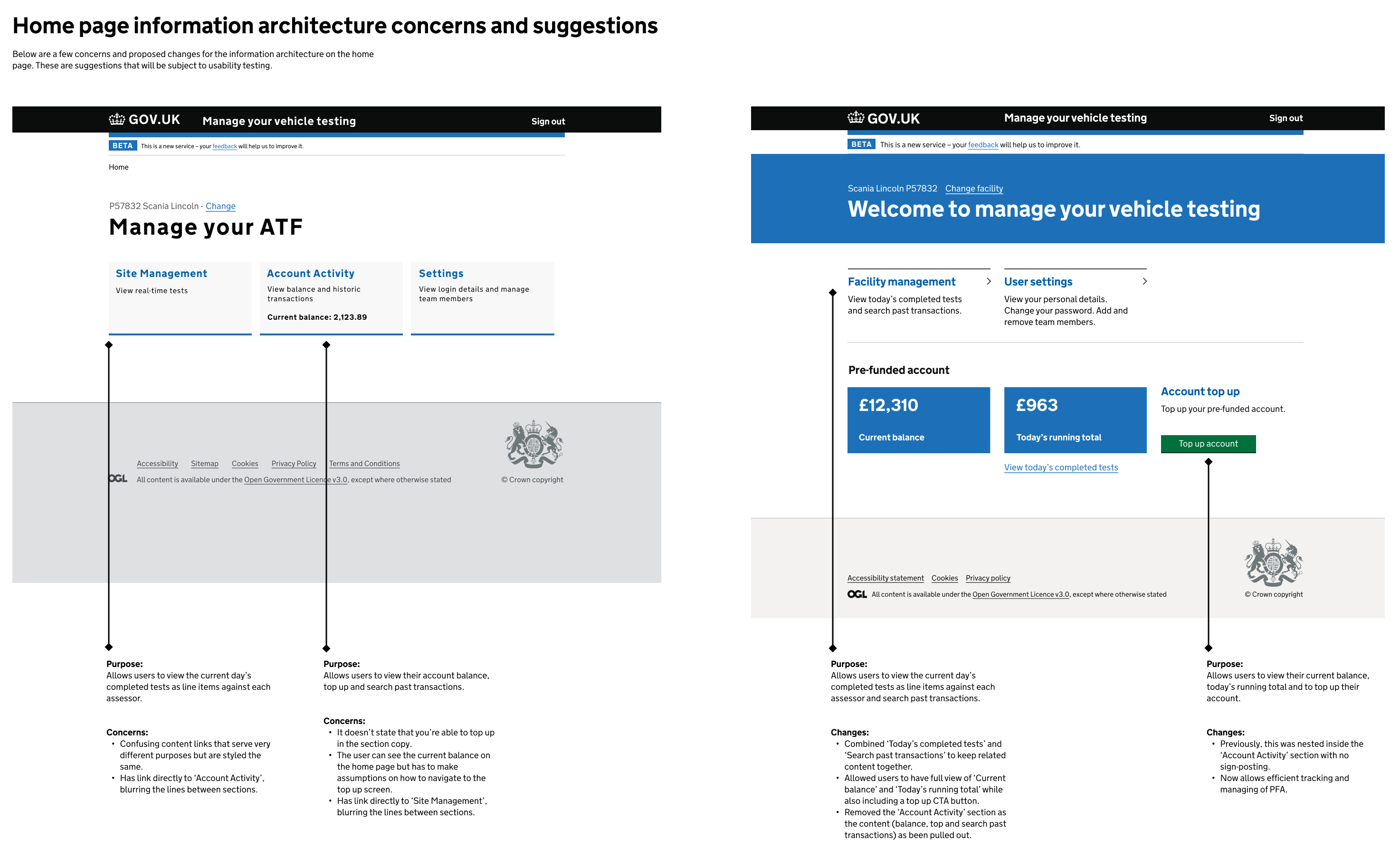
Showing a side by side comparison of the original and redesigned MYVT home page
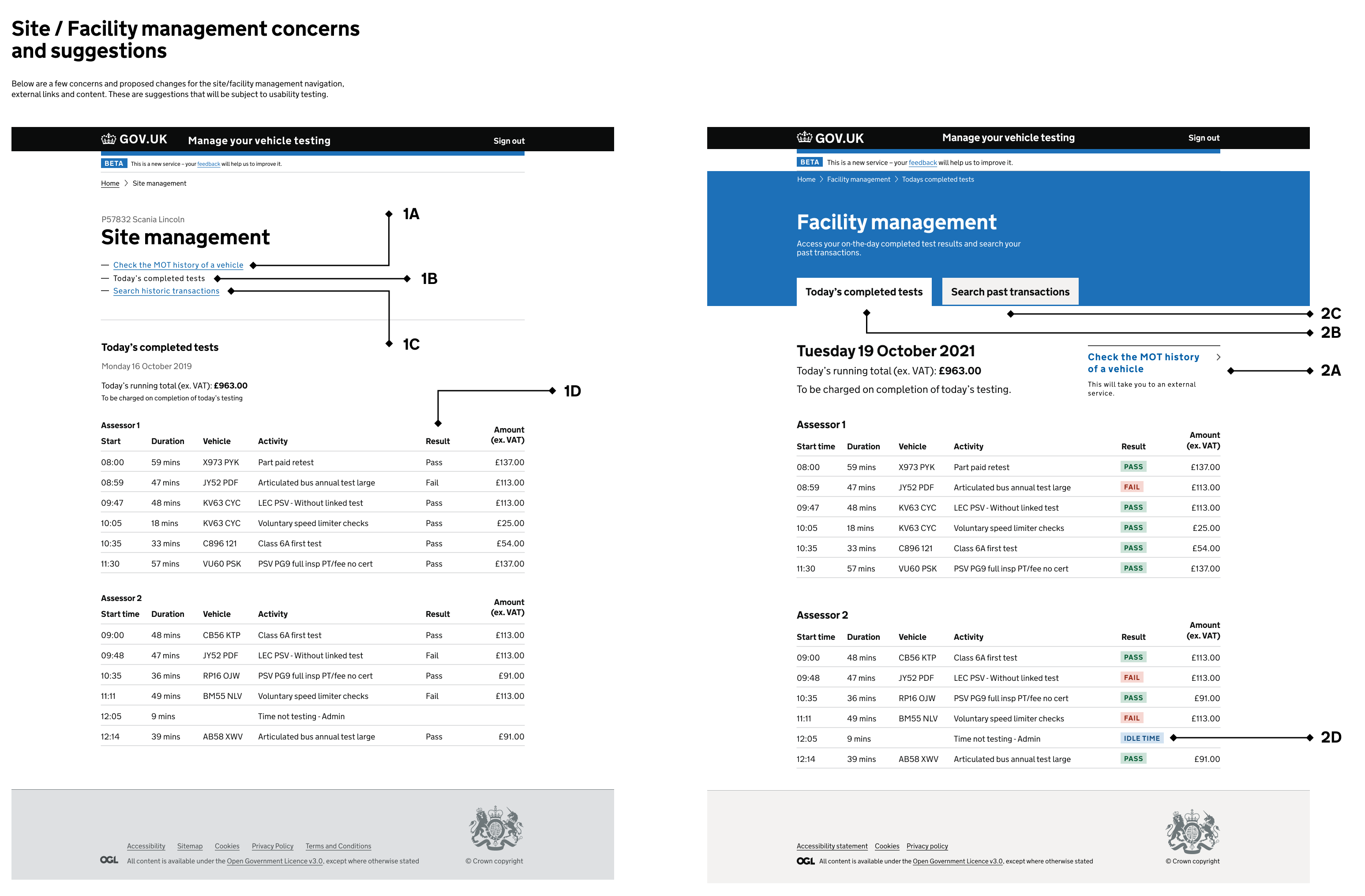
Showing a side by side comparison of the original and redesigned MYVT completed tests page
Once we had validation and Product Owner buy-in, I kept iterating based on feedback and set up regular testing sessions. We built a solid rhythm of design, test, refine, and release that delivered quick wins and consistent improvements for users.
DVSA were understandably cautious after their experience with the previous vendor. They asked for a clear record of decisions and full visibility of design changes. To help with this, I created an Iteration Tracker in Figma. It showed the original pre-moratorium designs, the updated versions, and every change that came after. Each iteration included notes from user testing and the reasoning behind decisions. This approach gave the DVSA exactly what they needed and became a model for how we documented and communicated design work.
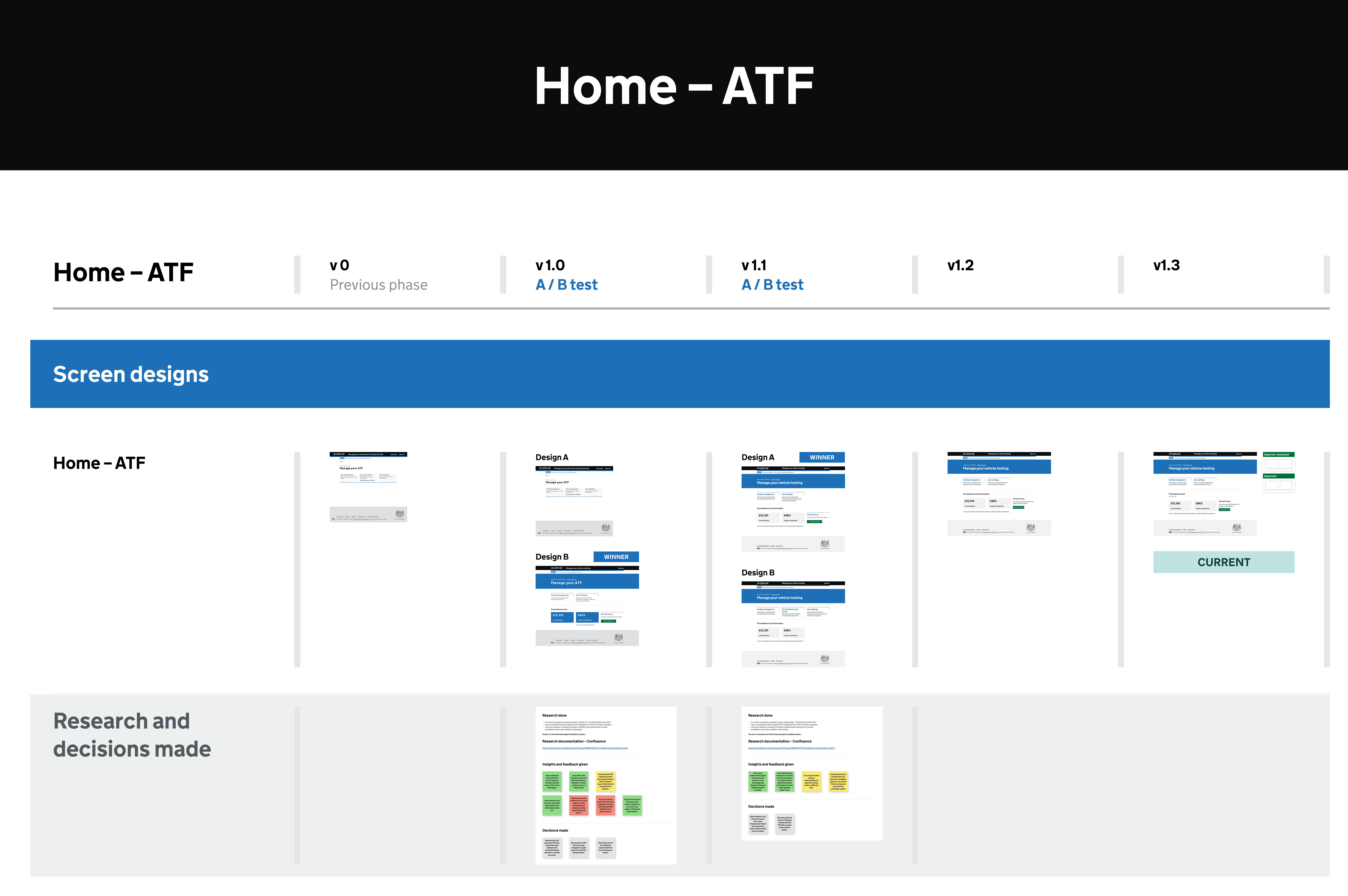
The iteration tracker that allowed stakeholders to see how designs evolved over time and the reasons why
We continued refining the service over several months, building trust and momentum. As part of that, our UCD team visited the DVSA Customer Service Centre in Swansea for in-person workshops. These sessions focused on invoices, transaction history and guidance for users. They proved invaluable, both for improving the service and for deepening relationships with the people who use and support it every day.
The outcome
By the time MYVT reached its GDS Beta Assessment, we were also working on Vehicle Test Management (VTM), a separate internal system used by DVSA staff to manage vehicle technical records. These records hold the full specifications for everything from kit cars to HGVs and even specialist vehicles like blood transport motorbikes.
Preparing for the Beta assessment took months of planning, documentation and evidence gathering. When it came time to present, our work was recognised with a flawless pass and zero recommendations, which is rare for a government digital service.
The project not only helped DVSA move away from outdated systems but also restored faith in the organisation’s digital approach. The result was a more coherent, transparent service that’s easier to use and easier to maintain.
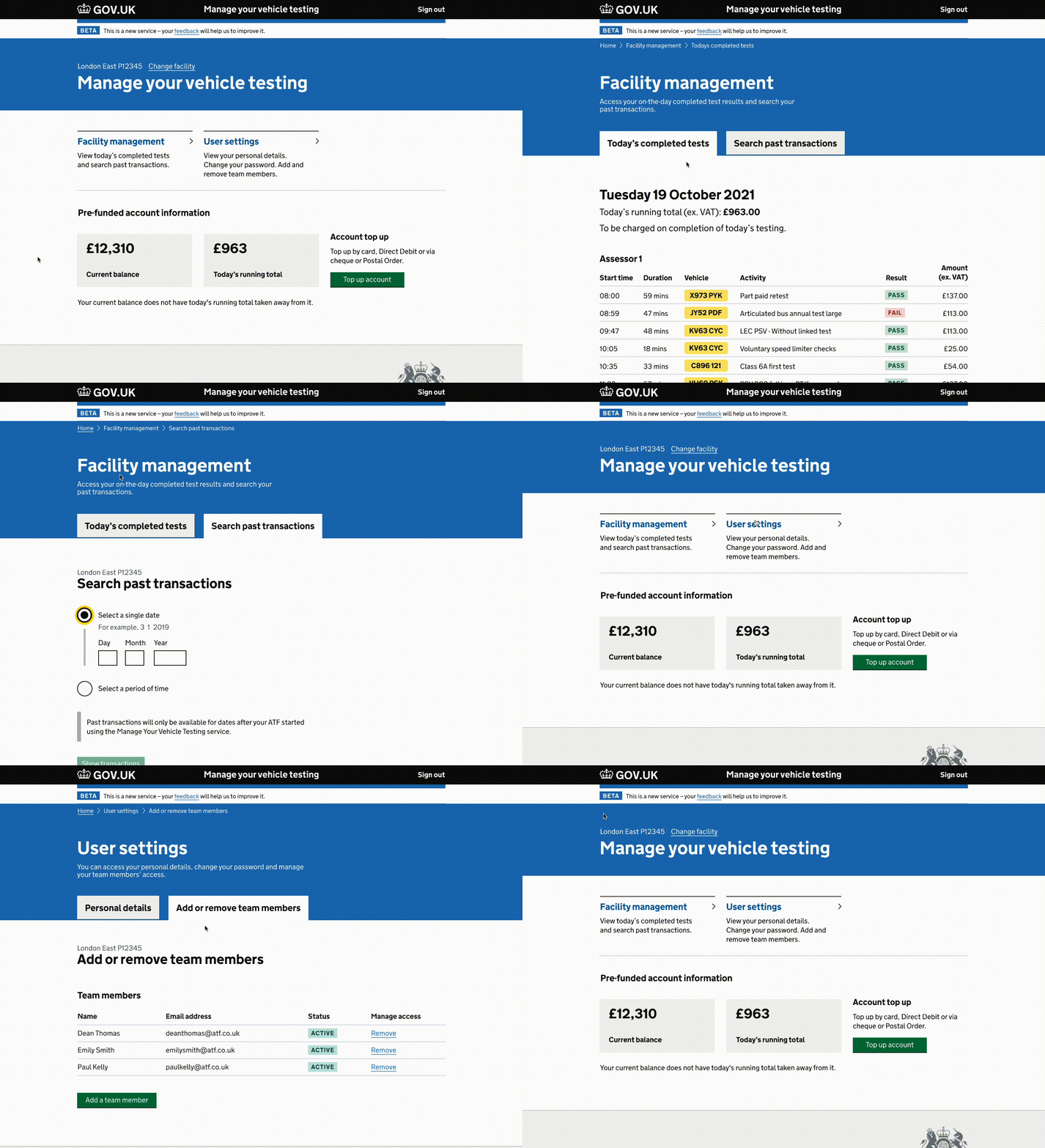
A short demo of the MYVT portal
Learnings
Some key takeaways from the project:
- Keep the bigger picture in view. It’s easy to get caught up in details and forget how all the systems connect.
- Bring every stakeholder along. Some people were still attached to pre-moratorium work, and a little more personal communication would have helped ease that transition.
- Openness and validation go a long way. When people see the reasoning behind your choices, they trust the process.
Final thoughts
This project showed me that transforming legacy systems isn’t just about replacing old tech or cleaning up interfaces. It’s about rebuilding confidence, bringing people together, and proving that public sector services can be genuinely user-centred, transparent and efficient.