Earth Friendly Product
 Back
Back
At a glance
Challenge: Supporting NATS in exploring new ways to make aviation more sustainable through innovation and design.
Process: A fast, collaborative sprint combining research, workshops, and design to shape and refine bold ideas.
Outcome: The Green Aviation Index became a live platform helping reduce emissions and improve flight efficiency.
Learnings: Early alignment, clear goals, and rapid feedback turned creative thinking into real results.
Introduction
NATS wanted to explore how innovation could make aviation more sustainable, developing new technology to support its goal of reducing the industry’s environmental impact.
Over eight weeks, we helped turn early ideas into practical concepts ready for real-world application.
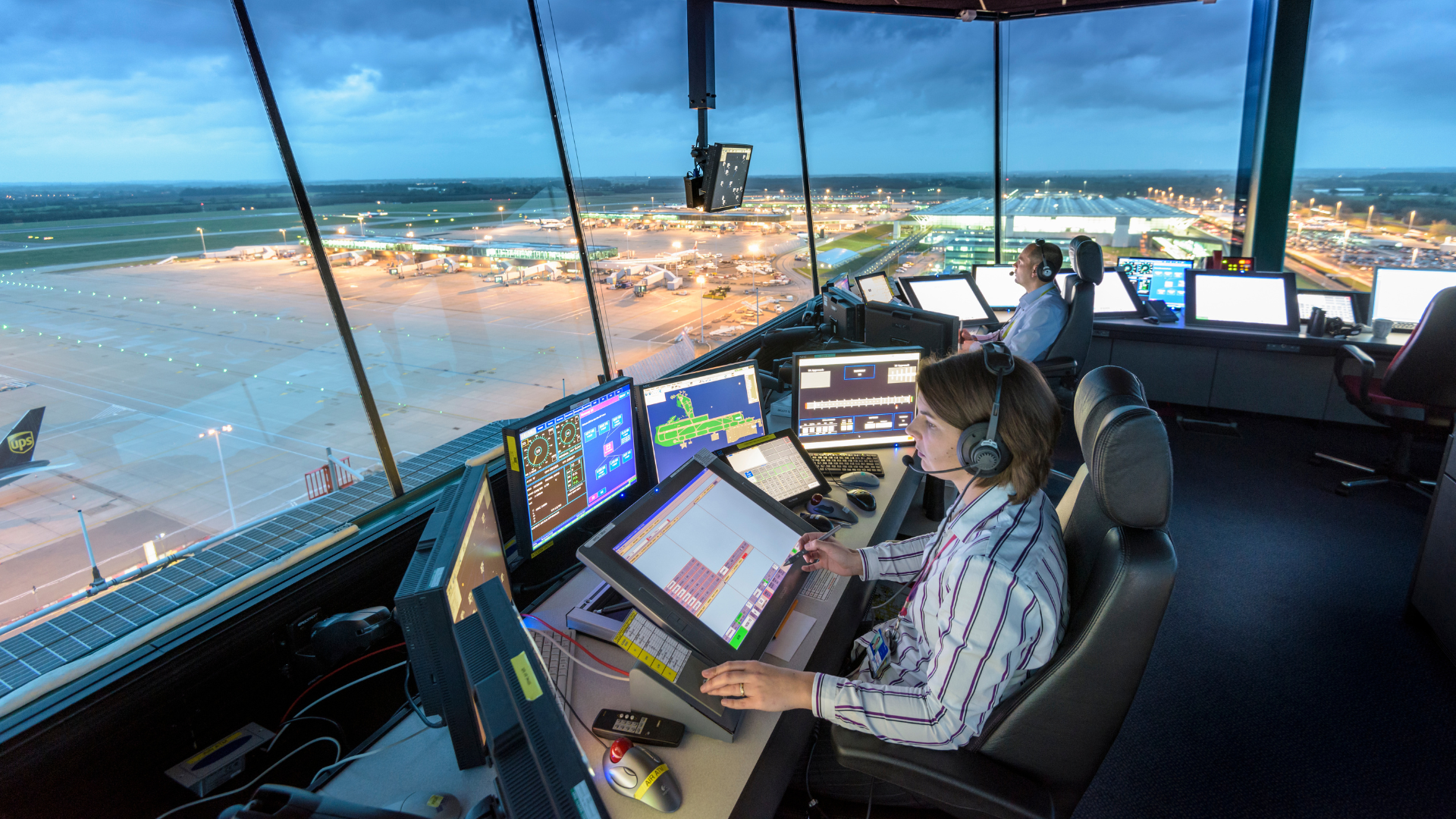
Air traffic controllers at work looking over airport gates and runways
The challenge
The NATS Earth Friendly Product engagement was an intensive 8-week project focused on helping their innovation team develop three green technology concepts, with one to be taken into 2025 and developed into a product or service.
Joining me, as product designer, we had four other CGI colleagues. A lean product specialist, two digital consultants, and a technical architect.
We partnered closely with four NATS colleagues who acted as subject-matter experts and our link into the wider organisation.
Process and key activities
We began with stakeholder interviews to uncover ideas, challenges, and ambitions from across NATS. These insights became the foundation for a collaborative workshop where we prioritised opportunities and aligned on key areas of focus.
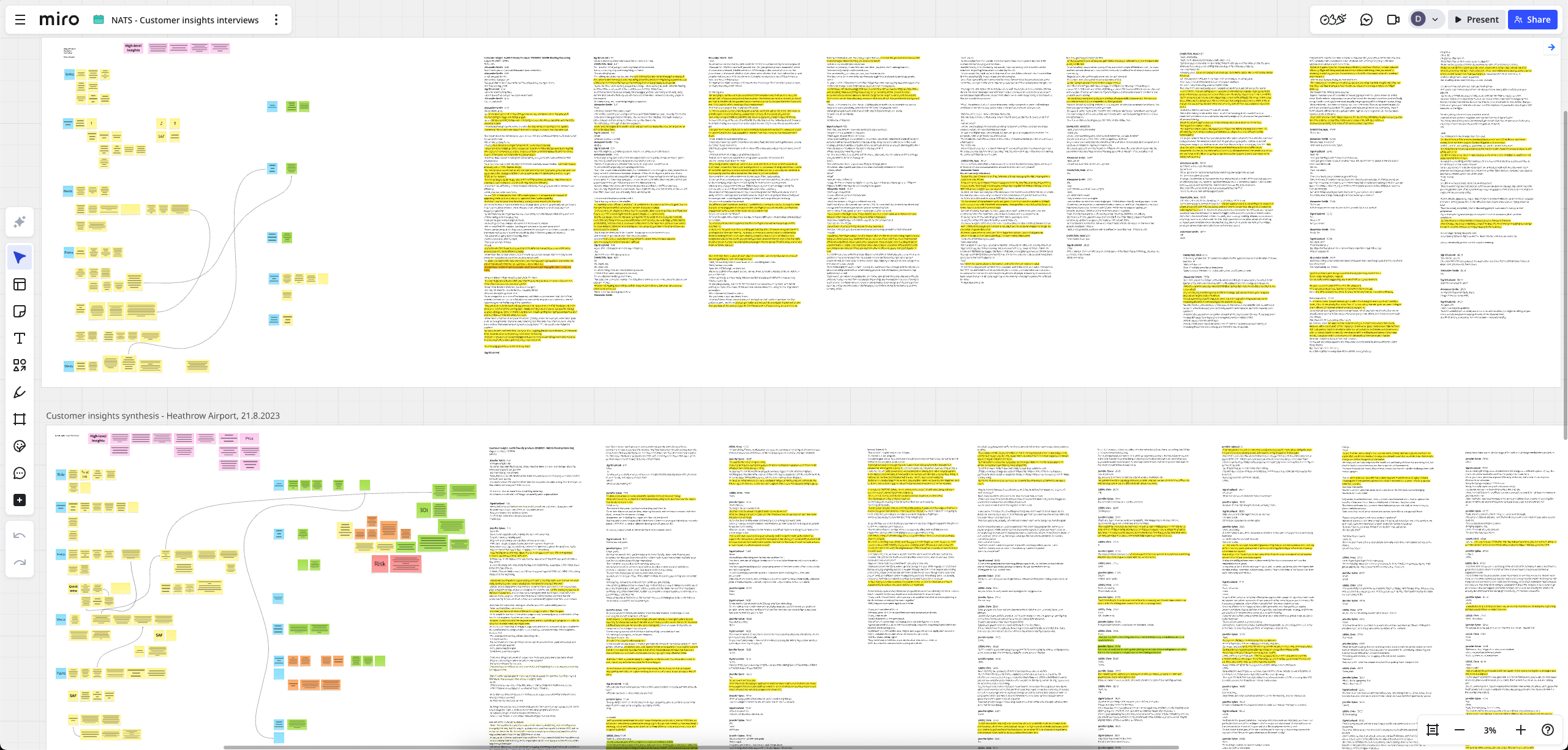
A Miro board showing 2 synthesised interview sessions and transcripts
From there, we grouped ideas into opportunity spaces such as Data for Good, Resource Management, Fuel and Efficiency, and New Competitors. This helped us connect each concept directly to NATS’ goal of becoming more Earth Friendly.
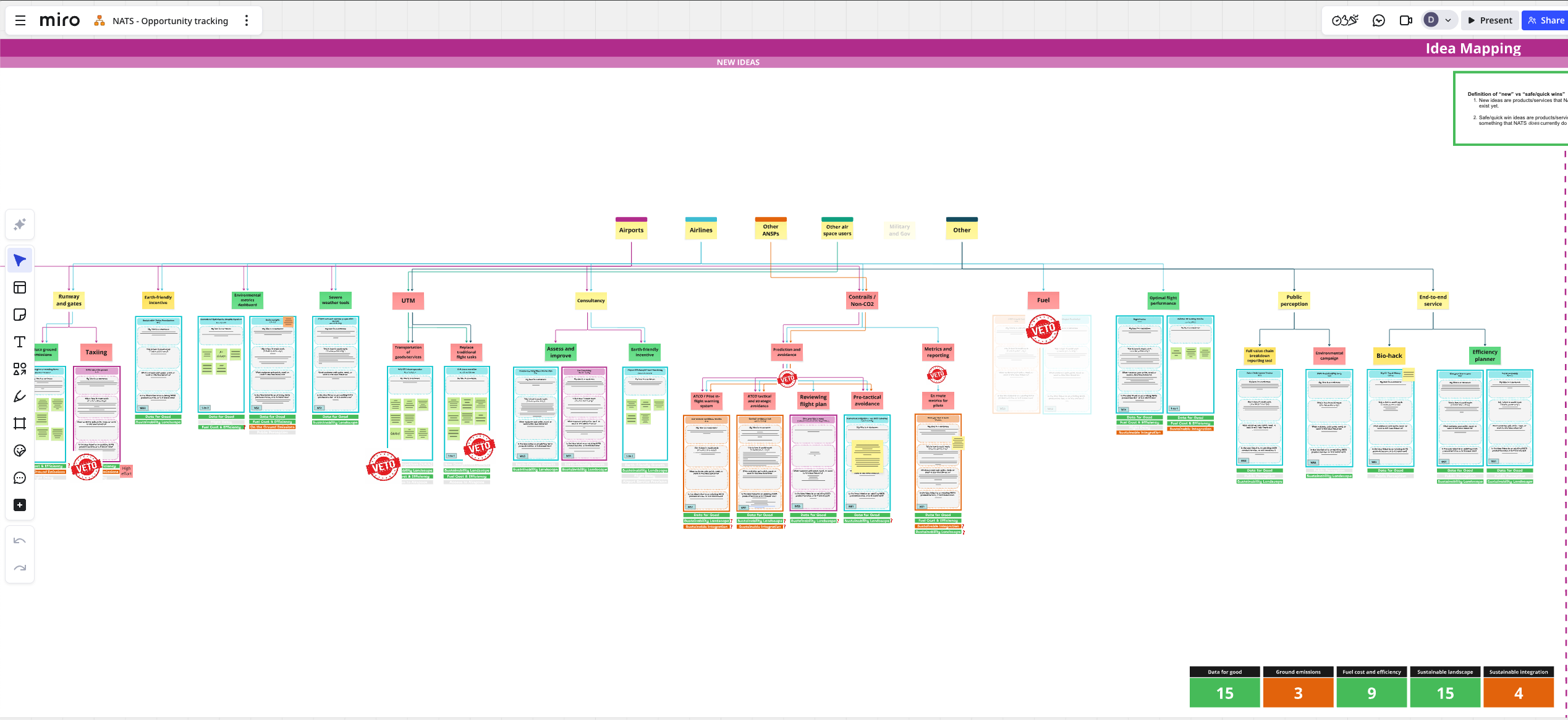
A Miro board showing many stakeholder concepts mapped to the different opportunity spaces
We followed up with market research and ecosystem mapping to identify where NATS could have the most meaningful impact. Using these insights, we refined and filtered the ideas through multiple workshop rounds — combining research, design, and stakeholder feedback to bring structure and clarity to the strongest opportunities.
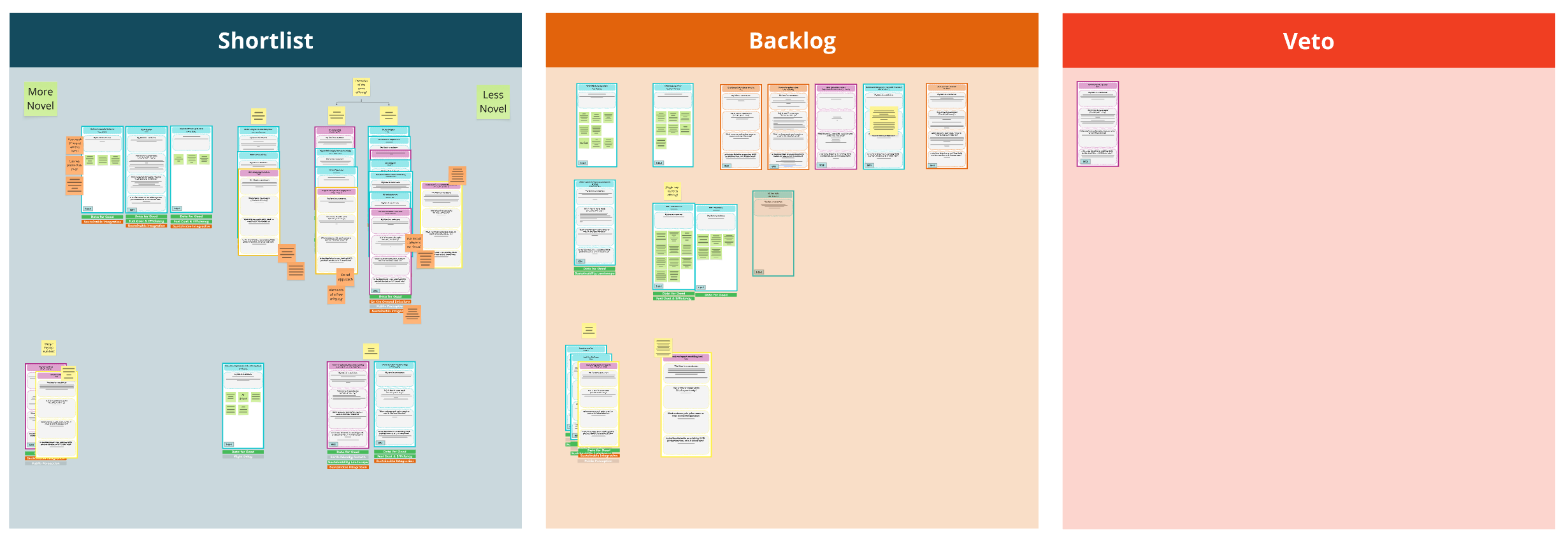
A Miro board showing the process of shortlisting some of the best concepts
As the visual lead, I created low-fidelity wireframes, high-fidelity dashboards, and concept sketches to bring the ideas to life. To keep pace, I introduced an asynchronous feedback process that allowed the team and stakeholders to review designs in real time. It was fast, fluid, and highly collaborative, keeping everyone engaged and aligned.
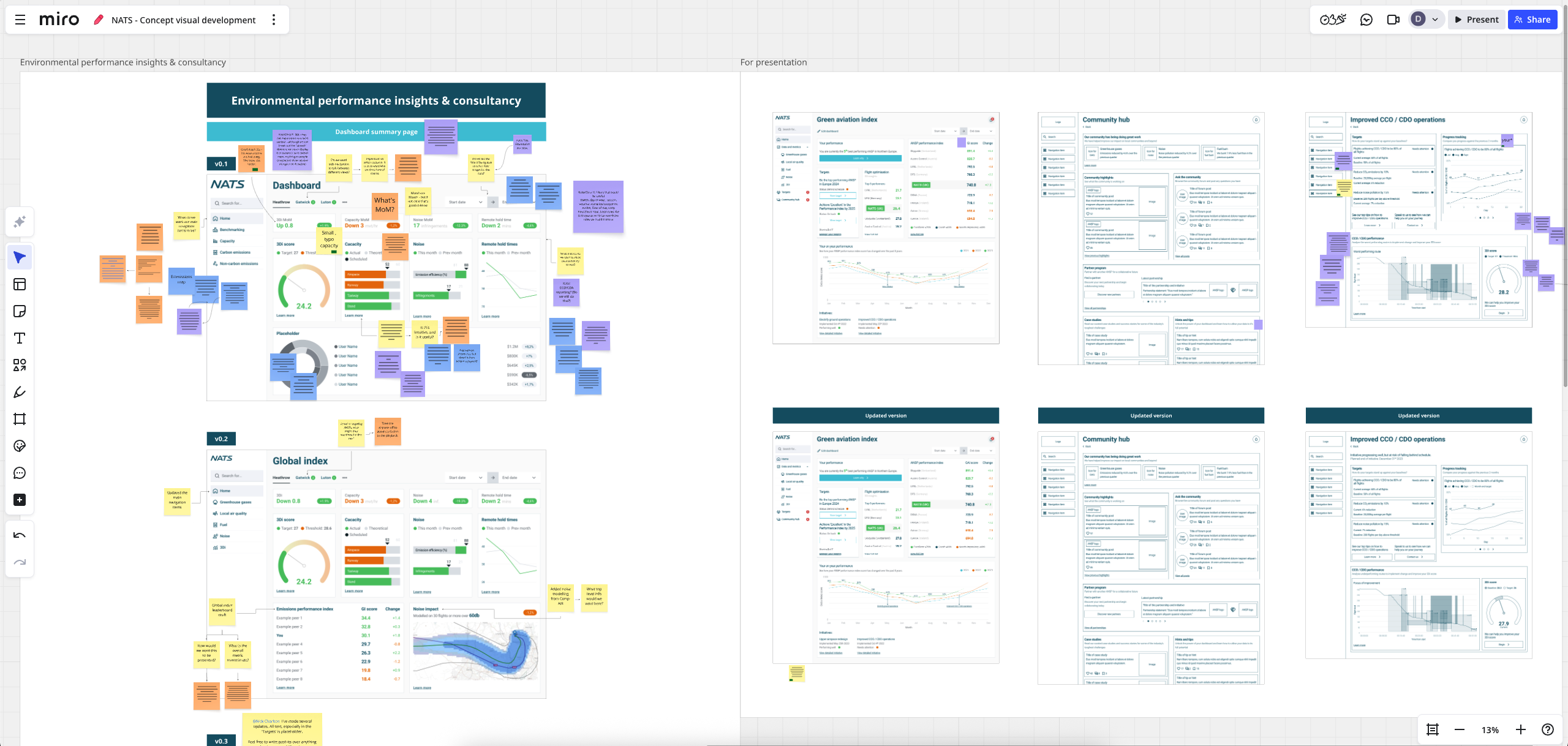
A Miro board showing a snippet of the market research and ecosystem mapping
The outcome
After several rounds of iteration, we arrived at two standout concepts.
- Green Aviation Index (GAI) — a platform designed to benchmark and visualise aviation sustainability performance.
- Greener Ground — a solution focused on improving ground operations, reducing fuel burn during taxiing, and increasing efficiency across airport movements.
GAI was selected by NATS senior leadership and has since evolved into a fully operational product under a slightly new name, GAIN. The project demonstrated how rapid, design-led collaboration can turn early ideas into viable, market-ready innovation. It proved that environmental ambition and commercial opportunity can absolutely go hand in hand.
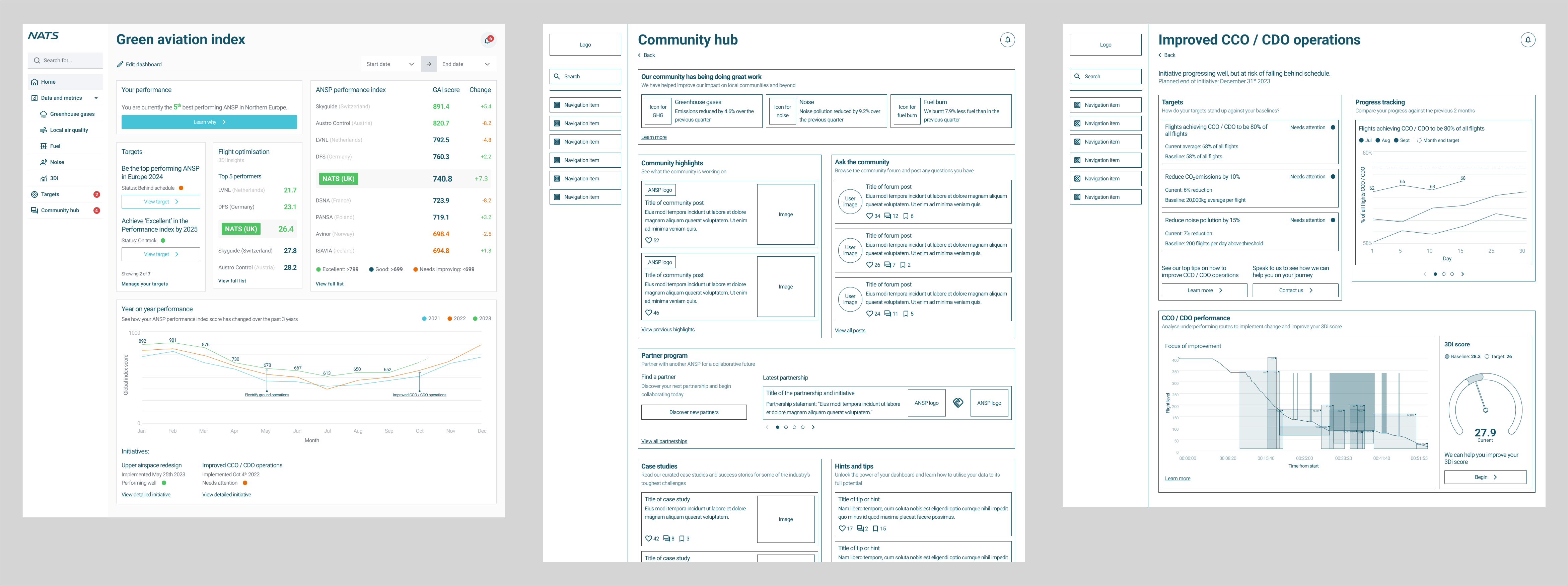
A screenshot showing a hi-fi design of the GAI dashboard followed by some wireframes of other pages
Learnings
Every project brings valuable takeaways. From this one, a few that stood out:
- Start with clear, reusable success measures to save time.
- Share a concise Lean Product brief before the kickoff.
- Align early with the client on readiness and expectations.
- Identify decision-makers early and give them space to guide direction.
- Have customer participants lined up in advance for faster feedback.
Final thoughts
This engagement showed that when creativity, collaboration and design come together, ambitious ideas can become real-world change. Our leading concept evolved into what NATS now call “GAIN”. This is a global benchmarking platform helping navigation service providers reduce emissions and improve efficiency.